
In recent years, traditional Indian art has caught the eye of global art lovers and collectors. Among these diverse and deeply symbolic forms, Pithora painting has emerged as a fascinating cultural and visual narrative that is attracting growing international recognition. Rooted in tribal rituals and storytelling, this ancient folk art of Gujarat is now making its way from village walls to global art exhibitions and modern interiors, bridging centuries through its intricate art form.
What Is Pithora Painting?
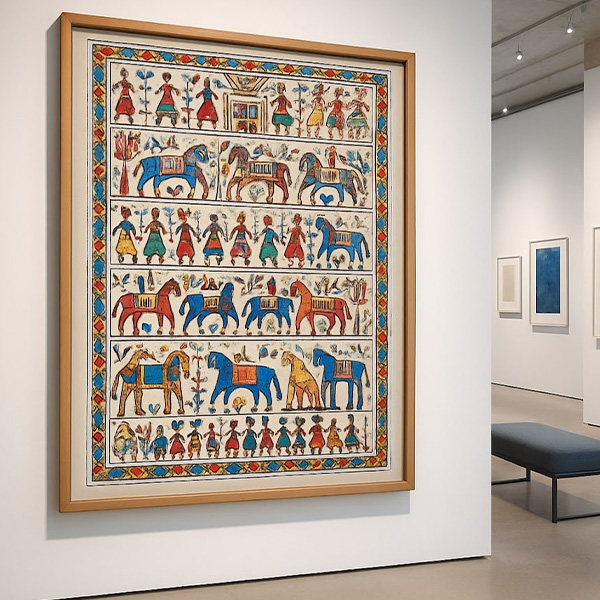
Pithora painting is a vibrant and ritualistic tribal art form predominantly practiced by the Rathwa, Bhilala, and Nayak tribes in the Chhota Udepur/Udaipur and Panchmahal districts of Gujarat and parts of Madhya Pradesh. Traditionally painted on the walls of tribal homes, Pithora art is more than decorative – it is a spiritual expression and offering to the deity Pithora Dev.
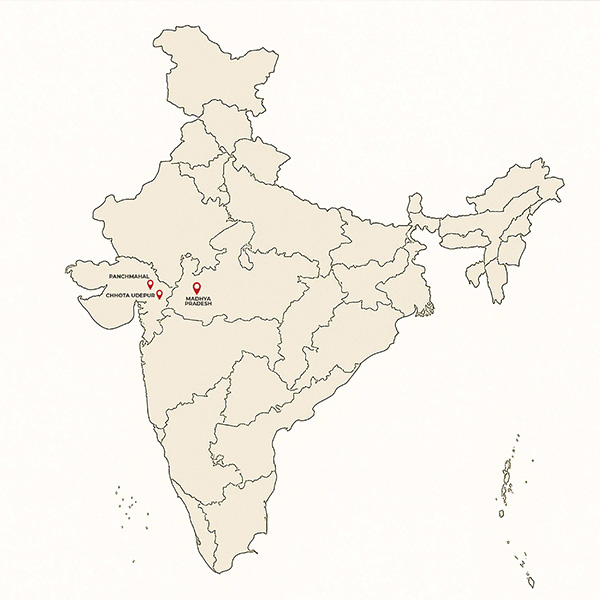
This map highlights the key regions—Chhota Udepur, Panchmahal, and Madhya Pradesh—where Pithora painting continues to thrive as a sacred tribal tradition.
Which State Is the Pithora Painting Related To?
Pithora painting is closely associated with the state of Gujarat, particularly in the tribal belts of western India. Although practiced in parts of Madhya Pradesh as well, Gujarat remains the epicenter for this traditional ritual art.
Submit your Botanical artwork for the Botanical Art Collection 2026
The Sacred Ritual of Pithora Art
Unlike most visual art forms, Pithora paintings are commissioned rather than spontaneously created. They are usually made to mark significant events such as childbirth, marriage, recovery from illness, or the fulfillment of a vow. Before the painting begins, a ritual called ‘Lipna’ (preparation of the wall) is performed by women, typically unmarried girls, using a mixture of cow dung and white clay. The actual painting is done by male artists called Lakhindra.
The creation of a Pithora painting is a communal celebration, often spanning twelve to fourteen hours of continuous work, accompanied by music, dance, and a trance-like atmosphere, fostering unity and intimacy within the community. The significant expenses involved in commissioning a Pithora painting, including payments to the Lakhara, ritual specialists, and provision of elaborate food and gifts, highlight its function as a vital economic engine within the tribal community. Upon completion, the Badva, a tribal shaman, inspects the fresco, sometimes entering a trance-like state where the god Pithoro is believed to manifest through his body, consecrating the artwork and offering predictions for the family.
Also Read: History of Lippan Art – From Village Huts to Urban Interiors
Traditional Pithora Art: Themes and Motifs
The artwork typically depicts scenes from tribal life – horses, gods, humans, the sun, moon, and various flora and fauna. One of the most striking features is the use of horses, believed to be the vehicle of Pithora Dev. Moreover, various types of horses represent specific deities or ancestral figures, such as the ‘Purvaj na Panch Ghoda’ (five horses of ancestors), ‘Saval Dharmi Ghoda’ (horses of civic righteousness), and the ‘Meghani Ghoda’ (a white, two-headed horse believed to bring rain). Intriguingly, the art has evolved to incorporate modern symbols such as planes, railway tracks, cars, and computers, demonstrating its adaptive nature and its connection to contemporary realities. The colors used are natural and bright, often derived from plant-based or mineral sources. Despite its raw and rustic aesthetic, traditional Pithora art displays an intricate symmetry and storytelling that connects generations.
A unique aspect of the art is that the Lakhara “writes” the painting, while the Badva “reads” and interprets it, highlighting a distinct division of roles in creating and understanding its profound meaning.

Why is Pithora Painting Gaining Global Attention?
1. Cultural Authenticity and Spiritual Depth
In a world craving authentic experiences and mindful art, Pithora offers a genuine glimpse into tribal beliefs and community rituals. Its spiritual foundation gives the art a depth that resonates with people seeking meaning beyond aesthetics.
2. Recognition by Art Institutions and Museums
Various Indian galleries and cultural organizations have started showcasing Pithora paintings. International interest surged when pieces of Pithora art were exhibited at global folk and tribal art festivals. Moreover, the support from institutions has further elevated its profile.
3. Modern Interior Appeal
Interior designers and architects are increasingly using Pithora paintings in contemporary homes and commercial spaces for their bold colors, symmetrical patterns, and cultural richness. This blend of tradition with modern aesthetics is another factor fueling its popularity.
4. Support from Art Galleries in India
Leading spaces like Hina’s Art Pavilion (HAP) – Art Gallery in Ahmedabad are playing a key role in spotlighting Pithora art through exhibitions, educational art workshops, and collaborations with tribal artists. By providing a platform for these voices, such galleries are helping this art form gain global exposure.
5. Digital Storytelling and Social Media
With the advent of Instagram, Pinterest, and digital art platforms, tribal art is now just a click away. Artists and art communities are sharing stories, time-lapse videos of painting processes, and historical context – all of which have contributed to the growing popularity of Pithora art.
Preservation and Revival
While the global interest is heartening, it is equally important to ensure the preservation of traditional Pithora art. Local governments, NGOs, and cultural forums are working alongside tribal communities to pass this art form on to future generations, ensuring it retains its original meaning and technique. However, the communal aspect of Pithora creation, once a family activity that strengthened bonds, is diminishing, becoming more individualistic as family members prioritize other occupations in the modern world.
Conclusion
Pithora painting, once confined to the inner walls of tribal homes, is now resonating with art lovers across the world. It stands as a testament to India’s rich tribal heritage and offers a spiritual lens into the lives of indigenous communities. As interest continues to grow, platforms like Hina’s Art Pavilion are crucial in connecting traditional artists with a modern audience and keeping the soul of this art alive.
Explore the world of Pithora painting and other traditional Indian art forms at Hina’s Art Pavilion – a space where culture, creativity and community converge.