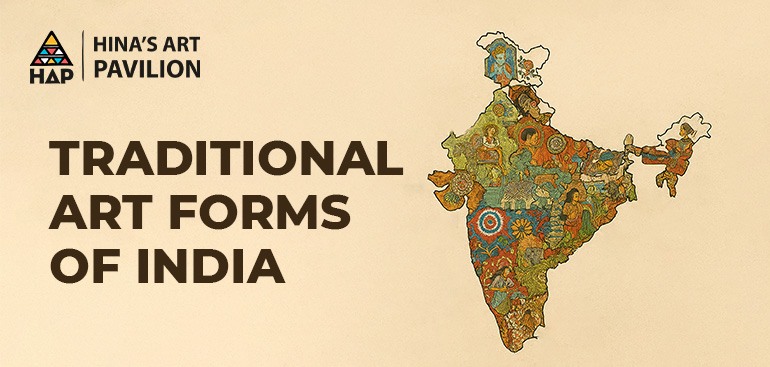
India is a land painted with stories. Traditional art forms of India aren’t just beautiful—they’re living, breathing expressions of its cultural soul. Passed down through generations like heirlooms, these creative traditions reflect India’s deep-rooted spirituality, community rituals, and colorful diversity. From earth-toned tribal murals to gilded miniature courts, every region offers a different visual language that speaks to its past and present.
What are Traditional Art Forms?
Traditional Indian art refers to visual expressions rooted in ancestral techniques—be it painting, sculpture, weaving, or pottery. Created using natural materials like mineral pigments, clay, and organic dyes, these works are both sacred and social. They narrate folk tales, honor deities, mark life events, and bring communities together—bridging time with texture and tone.
Why Are Traditional Art Forms Important?
- Cultural Identity: These arts safeguard the heritage and distinct flavor of each region—from mountain temples to desert hamlets.
- Community Bonding: Many are collective crafts—painted during weddings, festivals, or seasonal rituals.
- Empowerment: Especially for women and children, traditional art offers a platform for self-expression and economic independence-a mission central to Hina’s Art Pavilion.
- Sustainability: With their use of natural dyes, clay, leaves, and plant-based pigments, these art forms are as eco-friendly as they are exquisite.
At Hina’s Art Pavilion, we celebrate these art forms not just as creative expressions, but as living traditions that continue to inspire, educate, and connect people across generations.
Submit your Botanical artwork for the Botanical Art Collection 2026
Let’s explore some of the most celebrated traditional Indian art forms, their origins, meanings, and relevance in today’s world.
State-wise iconic Traditional Art forms of India
Here’s a comprehensive, state-wise guide to the most iconic traditional art forms of India:
Interesting Facts
Did you know that some of India’s most celebrated traditional art forms—Madhubani (Bihar), Sohrai and Kohbar (Jharkhand), Lippan Kaam (Gujarat), and Aipan (Uttarakhand)—have historically been practiced and preserved by women? These art forms are not just decorative traditions but deeply matrilineal, passed down from mother to daughter over generations—making them powerful expressions of feminine creativity and cultural legacy.
1. Andhra Pradesh & Telangana – Kalamkari Painting & Cheriyal Scrolls
Kalamkari is a vivid textile tradition, where natural dyes breathe life into cotton through intricate narratives from the Mahabharata and Ramayana. In the Srikalahasti style, each stroke is drawn freehand with a bamboo kalam, while the Machilipatnam style uses hand-carved blocks.
Cheriyal Scroll Painting, native to Telangana, is a folk storytelling gem. Painted in brilliant reds, yellows, and blues, these scrolls unfold stories scene by scene—like a visual folk performance.
• Themes: Hindu epics, folklore, mythology
• Medium: Cotton fabric with natural dyes, painted scrolls
2. Arunachal Pradesh – Thangka Paintings
Arunachal Pradesh’s Thangka paintings, heavily influenced by Tibetan Buddhism, are meditative and spiritual scrolls traditionally used for religious instruction. These intricate paintings are created on silk or cotton and feature deities, mandalas, and sacred teachings.
• Themes: Buddhist deities, mandalas, life of Buddha
• Medium: Cotton or silk with natural pigments
3. Assam – Manuscript Paintings & Mask Paintings
Assam’s traditional art includes manuscript painting, commonly found in medieval Vaishnavite texts, and vibrant mask painting used in Sattriya performances. These art forms showcase religious devotion and regional craftsmanship.
• Themes: Vaishnavism, stories of Krishna and Vishnu
• Medium: Handmade paper, bamboo, and fabric masks
4. Bihar – Madhubani & Manjusha Art
Bihar is famous for Madhubani art, traditionally created by women using fingers, twigs, or matchsticks. Manjusha art, often overshadowed, is associated with the Bihula-Bishari folklore. Both styles are colorful, symbolic, and rooted in local legends.
• Themes: Mythology, fertility, marriage, folklore
• Medium: Wall, canvas, handmade paper, cloth
5. Chhattisgarh – Godna & Pithora Art
Tribal communities in Chhattisgarh express their rituals and traditions through Godna and Pithora art. Inspired by tattoo patterns and ancestral stories, these artworks depict nature and tribal deities.
• Themes: Deities, nature, animals, everyday life
• Medium: Mud walls, fabric, and canvas
6. Goa – Christian Art & Azulejos Tiles
Goan traditional art combines Indian and Portuguese influences. Christian-themed paintings, Azulejos tiles, and vibrant folk styles reflect Goa’s multicultural heritage.
• Themes: Biblical scenes, Christian saints, floral patterns
• Medium: Wall murals, tiles, canvas
7. Gujarat – Rogan Painting, Pithora Art, Lippan Art & Ajrakh Printing
Gujarat’s art heritage glows with textural brilliance and earthy symbolism. Rogan painting, a rare gem from Kutch, uses a castor oil paste drawn with a metal stylus to form symmetrical, glistening patterns. Pithora art, created during rituals by tribal communities, adorns mud walls with vibrant depictions of horses, gods, and nature. Lippan Kaam, or mud and mirror work, reflects both sunlight and soul—crafted by Rabari women using white clay, cow dung, and mirrors. Ajrakh printing features deep indigo and madder red block prints, echoing Islamic geometry and sacred rhythm.
• Themes: Tribal rituals, nature, floral patterns, geometry
• Medium: Cloth (Rogan, Ajrakh), wall murals (Pithora, Lippan)
8. Haryana – Chitera Art & Wall Paintings
Haryana’s folk art traditions come alive on walls, particularly during festivals and ceremonies. Chitera art uses natural pigments to illustrate village life, local deities, and everyday scenes with a rustic charm that reflects the heart of rural India.
• Themes: Daily village scenes, mythology
• Medium: Wall surfaces, natural pigments
9. Himachal Pradesh – Kangra Miniature Painting
Kangra paintings are delicate and romantic, often centered around the divine love stories of Radha and Krishna. Emerging from the Pahari school, they are noted for their soft colors, naturalism, and poetic moods.
• Themes: Bhakti, nature, love stories
• Medium: Handmade paper with mineral colors
10. Jharkhand – Sohrai & Kohbar Paintings
Created primarily by tribal women, Sohrai and Kohbar wall paintings are celebratory expressions made during harvests and weddings. Using earth tones and natural dyes, they depict fertility, livestock, and the symbiosis between humans and nature.
• Themes: Fertility, animals, daily life, worship
• Medium: Walls with natural pigments
11. Karnataka – Mysore Painting
Mysore paintings are known for their refined elegance and devotional depth. Featuring Hindu gods and goddesses, these works are crafted using gold foil, subtle colors, and meticulous detailing, often portraying mythological events.
• Themes: Hindu gods, especially Vishnu and Lakshmi
• Medium: Paper, cloth, wood with gold leaf
12. Kerala – Murals & Kalamezhuthu
Kerala’s temple murals are striking in composition and color, typically featuring deities in expressive forms and postures. Kalamezhuthu is a floor-art ritual drawn with powdered pigments to invoke the divine during festivals.
• Themes: Deities like Shiva, Vishnu, and Devi
• Medium: Walls, temple floors, natural colors
13. Madhya Pradesh – Gond & Pithora Painting
Gond art features rhythmic patterns of dots, dashes, and lines that come together to form vibrant images of flora, fauna, and daily life. Pithora paintings, deeply ritualistic, are created to mark significant events within tribal communities.
• Themes: Nature, tribal mythology, celebration
• Medium: Walls, canvas, paper
14. Maharashtra – Warli Painting
Warli art is minimalist but powerful. Using a basic white pigment on mud walls, these geometric compositions portray scenes of farming, hunting, and dance, capturing the social fabric of tribal life.
• Themes: Farming, festivals, marriage, animals
• Medium: Wall, canvas, handmade paper
15. Manipur – Scroll Paintings & Tribal Art
Manipur’s scrolls are rich in narrative detail, often depicting scenes from epics like the Ramayana in a distinctly local style. Tribal paintings feature motifs drawn from nature and folklore.
• Themes: Epics, folk legends, nature
• Medium: Scrolls, wall paintings
16. Meghalaya – Tribal Painting Traditions
In Meghalaya, ritualistic art traditions use nature-inspired motifs on textiles and walls, particularly during harvest and spiritual ceremonies.
• Themes: Tribal lore, nature, ceremonies
• Medium: Natural dyes, walls, fabrics
17. Mizoram – Tribal Decorative Art
Mizo traditional arts celebrate life and rhythm. Their motifs, often painted during festivals, highlight music, dance, and scenes from everyday community life.
• Themes: Dance, music, daily life
• Medium: Wall art, bamboo surfaces
18. Nagaland – Tribal Motif Painting
Tribal motifs in Nagaland reflect valor, ancestry, and the environment. Painted on wood, bamboo, and ceremonial objects, they are visual expressions of identity and heritage.
• Themes: Warrior culture, nature, ancestors
• Medium: Bamboo, wood, textiles
19. Odisha – Pattachitra Painting & Bhitti Chitra
Odisha’s Pattachitra paintings are ornate scrolls bursting with mythological drama. Artists use a mix of stone and plant-based pigments on palm leaves or cloth to illustrate the adventures of Lord Jagannath, Krishna Leela, and tales from the Ramayana. Bhitti Chitra, though lesser known, paints sacred visuals directly onto temple walls and lime-coated surfaces, echoing a time when every household was its own temple of art.
• Themes: Jagannath, Krishna Leela, Ramayana, rituals
• Medium: Cloth, dried palm leaves, wall surfaces with natural pigments
20. Punjab – Phulkari-Inspired Art
While primarily known for embroidery, Phulkari’s floral motifs and bold colors have influenced mural and textile painting in Punjab. These vibrant artworks capture everyday joy and collective spirit.
• Themes: Flowers, geometric patterns, village scenes
• Medium: Textiles and murals
21. Rajasthan – Phad, Miniature, Mandana & Pichhwai Painting
Rajasthan’s artistic legacy is as grand as its palaces and as spiritual as its shrines. Phad paintings are traveling stories—scrolls that unfold epic tales like Pabuji’s legend in bold, narrative frames. Miniature paintings from the royal courts dazzle with gold leaf, delicate brushwork, and Mughal-inspired finery. Mandana art decorates walls and floors during Diwali and marriage rituals, using rice paste on red clay to form sacred patterns. Pichhwai paintings, made for temples in Nathdwara, depict Krishna amidst lotus blooms, peacocks, and festival scenes, often in lush colors and ornate borders.
• Themes: Epic tales, Krishna Leela, royal life, divine legends
• Medium: Cloth, walls, paper, canvas
22. Sikkim – Thangka Art
Spiritual and detailed, Thangka paintings in Sikkim are created as visual guides for meditation and religious teaching in Buddhist traditions.
• Themes: Deities, mandalas, spiritual symbols
• Medium: Cotton or silk scrolls
23. Tamil Nadu – Tanjore Painting
Tanjore paintings are iconic for their radiant gold foiling and temple-inspired subjects. These classical South Indian artworks depict gods and goddesses in ornate attire, framed within arches and gem-like borders.
• Themes: Gods and goddesses
• Medium: Wood, canvas, gold foil
24. Tripura – Tribal Wall Art & Bamboo Painting
Tripura’s tribal communities use painted motifs on bamboo and mud walls during festivals. These symbolic designs convey tribal beliefs, harmony with nature, and ancestral respect.
• Themes: Community life, rituals, flora-fauna
• Medium: Bamboo, wall murals
25. Uttar Pradesh – Mughal Miniature & Sanjhi Art
Uttar Pradesh is renowned for its Mughal miniature paintings, blending Persian finesse with Indian themes. Sanjhi, a devotional stencil art form, uses intricate paper cutouts or colored powders to depict scenes from Krishna’s life.
• Themes: Court life, Krishna, floral motifs
• Medium: Paper, walls, cloth
26. Uttarakhand – Aipan Art
Aipan art involves drawing sacred motifs with rice paste on red ochre backgrounds. Practiced mostly by women, it symbolizes auspiciousness and spiritual intent during festivals and household rituals.
• Themes: Geometric patterns, religious symbols
• Medium: Floors, walls, wooden surfaces
27. West Bengal – Kalighat & Pattachitra Painting
Kalighat paintings began in 19th-century Kolkata, capturing urban life, social satire, and mythology in bold strokes and expressive forms. Bengal’s version of Pattachitra features storytelling scrolls accompanied by folk songs.
• Themes: Mythology, social life, devotion
• Medium: Cloth scrolls, paper, canvas)
Indian Art Forms List
India’s cultural richness is beautifully reflected in its diverse traditional art forms, each rooted in regional beliefs, rituals, and history. These forms are not just decorative – they are windows into the life, faith, and folklore of Indian communities. From tribal to classical, every style has a story to tell.
Here’s a curated list of famous Indian art forms that highlight the creative spirit of the nation:
| Art Form | Region/State | Key Feature |
| Madhubani Painting | Bihar | Geometric motifs, mythology, natural dyes |
| Warli Art | Maharashtra | Tribal life in white pigment on mud walls |
| Gond Art | Madhya Pradesh | Dots, lines, and vibrant depictions of nature |
| Kalamkari | Andhra Pradesh & Telangana | Epic tales on textiles using natural dyes |
| Pattachitra | Odisha & West Bengal | Scroll paintings of gods and folk stories |
| Phad Painting | Rajasthan | Narrative scrolls on cloth with heroic tales |
| Tanjore Painting | Tamil Nadu | Gold leaf, rich colors, religious themes |
| Pithora Art | Gujarat & Madhya Pradesh | Ritualistic wall paintings by tribal communities |
| Aipan Art | Uttarakhand | Sacred red and white patterns made by women |
| Lippan Kaam | Gujarat | Mirror and mud mural art on village walls |
| Sanjhi Art | Uttar Pradesh | Paper stencils for Krishna-themed decorations |
| Thangka Painting | Sikkim, Arunachal Pradesh | Buddhist scrolls with intricate religious themes |
| Kangra Miniature Painting | Himachal Pradesh | Delicate romance themes from Bhakti traditions |
| Manjusha Art | Bihar | Box-shaped storytelling art with vibrant borders |
| Kalighat Painting | West Bengal | Bold strokes with satire and devotion |
| Mysore Painting | Karnataka | Elegance, gold foil work, and fine detailing |
| Sohrai & Kohbar | Jharkhand | Ritual wall paintings for harvest and marriage |
| Bhil Painting | Rajasthan, Gujarat | Dots, animals, and nature in vivid tribal patterns |
| Miniature Painting | Rajasthan, Mughal courts | Royal court life, battles, and floral borders |
| Cheriyal Scrolls | Telangana | Folk narrative scrolls painted on khadi cloth |
This list is only a glimpse of India’s vast artistic diversity. Many of these styles are practiced by rural, tribal and women artists, often passed down through generations, keeping ancient traditions alive in modern times.
Conclusion
India’s traditional art forms are more than just aesthetics – they are reflections of life, culture, and community. At Hina’s Art Pavilion, a leading Art Gallery in Ahmedabad, we are committed to being a bridge between these timeless traditions and the modern art landscape. Through curated exhibitions, interactive workshops, and artist-led collaborations, we strive to preserve and promote India’s artistic legacy for generations to come.
Ready to Dive Into Indian Art? Love art? Learn with us in friendly workshops and check our event list anytime at HAP Event to see what’s coming next. Join Hina’s Art Pavilion and enjoy art the easy way.